Tuesday, August 29, 2017

Utah Native Linum lewisii, Blue Flax


Linum lewisii, a short lived perennial, was documented and named after Meriwether Lewis. It is often planted for erosion control and reclamation and is useful as a foraging plant for wildlife. Birds are especially attracted to the seeds and forage on them in the fall and winter.

Cultivated flax (Linum usitatissimum) is grown for fiber (flax) and seed oil (linseed).
Linum lewisii--Blue Flax

Tuesday, July 25, 2017

Timpanogos Wild Flowers

I took an early morning hike up Timpanogos. Crossed a glacier or two and enjoyed all the glorious wild flowers.
Geranium viscosissimum, sticky geranium

Eriogonum umbellatum, sulfur buckwheat

Castilleja rhexifolia var. sulphurea, Pale yellow Indian paintbrush
Lupinus argenteus; Lupine
Helianthella uniflora, Oneflower Sunflower

Wednesday, December 16, 2015

School Garden


We finished our midscale worm bin early December. The kids did a fantastic job with the construction and we are excited to introduce the worms to their home early spring. I know the worms can survive the winter but I am worried about user error and figure I can use the winter to iron out the kinks.  For example, I'm going to approach some local restaurants about composting their food scraps during the summer months.


Working those carpentry skills


Almost done, just need the lid


While looking through photos, I came across these gems from last spring

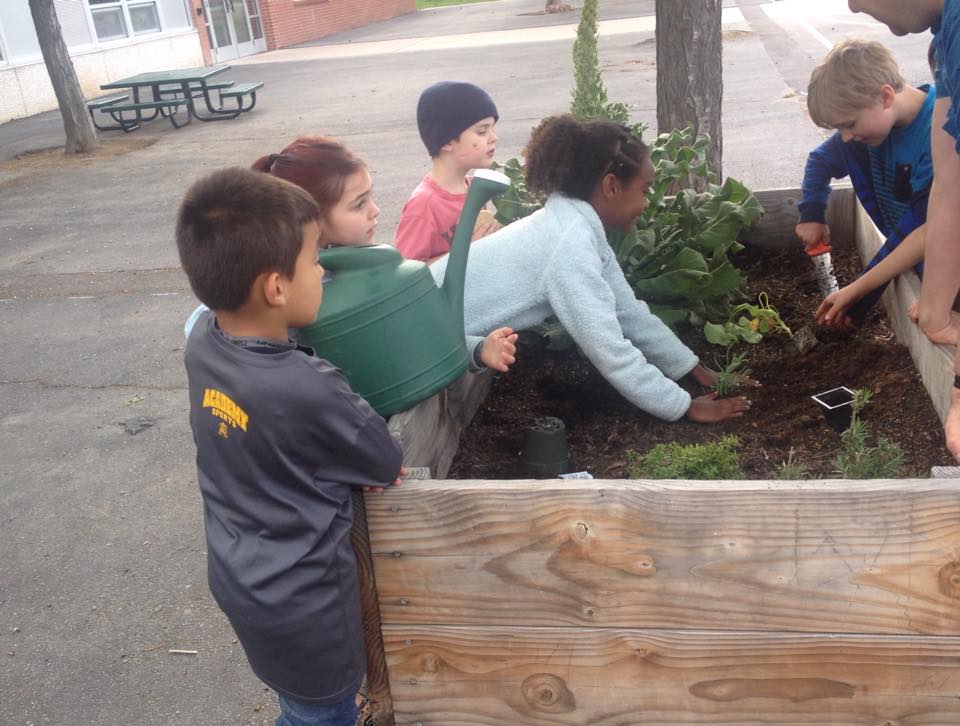
Planting herb bed
Watering in the new plants


Caging those tomatoes 


Sunday, September 20, 2015

Worm Composting

The kids in my gardening class are building a medium scale worm bin for the school. Here are some great links that have helped us along the way:


Creating a Worm Bin

Worm Composting Basics
How to Build a Worm Farm
Compost Bin made with Nursery Trays
Mid Scale Worm Bin

Science Behind Vermicompost

"Vermicompost--A Living Soil Amendment" Video


Worm Anatomy

http://extension.illinois.edu/worms/anatomy/

Soil Biology

Soil Microbiology

Sunday, September 13, 2015

Digitalis "Illumination Flame"

Nothing that lives, or can be, rigidly perfect; part of it decaying, part nascent. The foxglove blossom;--a third part bud, a third part past, a third part in bloom,--is a type of the life of this world. 
--John Ruskin, The Stones of Venice


Monday, April 13, 2015

More Spring Blooms


Fritillaria imperialis

Grape hyacinths in a quick April snowstorm

Spirea x cinerea

Pearlbush--Exochorda x marcantha


Viburnum

Weeping Siberian Pea-- Caragana arboresens 'Pendula'

Carol Mackie Burkwood Daphne

Flowering Quince

Sunday, March 29, 2015

Spring Bloomers


“When spring came, even the false spring, there were no problems except where to be happiest. The only thing that could spoil a day was people and if you could keep from making engagements, each day had no limits. People were always the limiters of happiness except for the very few that were as good as spring itself.” 
― Ernest Hemingway, A Moveable Feast

Hellebore
Hellebore
Flowering Quince
Magnolia

Sunday, January 11, 2015

Butterfly Garden

People need less lawn. It is boring and doesn't attract interesting wildlife. This year try planting a butterfly garden. Butterflies drink nectar from flowers so a butterfly garden needs to be filled with flowering plants. An optimal habitat for butterflies will have flowers blooming during the entire growing season. It also helps to add host plants that will provide nourishment for the emerging caterpillar larva. Most caterpillars eat plants specific to her species. Host plants are often weedy in habitat and will be damaged by the hungry caterpillars. Plant them in places where aesthetics aren't as important.  Another tip to attract butterflies and other pollinators is to clump plants together and to provide a water source.

Butterflies typically visit flowers that are:
  • In full sun
  • In clusters and provide landing platforms
  • Brightly colored (red, yellow, orange)
  • Open during the day
  • Ample nectar producers, with nectar deeply hidden
  • Nectar guides present
  • May be clusters of small flowers (goldenrods, Spirea) 
Butterfly Attracting Flowers


Asclepius tuberosa  - Butterflyweed


Buddleia--Butterfly Bush


Eupatorium maculatum 'Gateway' Spotted Joe Pye Weed--for the back of the garden. Gets up to six feet tall.

Echinacea--Purple Cone Flower

Hemerocallis--daylily

Rudbeckia--Black Eyed Susan--bloom from summer to frost
Aster spp.--Aster
Aquilegia canadensis – Columbine
Coreopsis palmata - Stiff Coreopsis
Echinacea pallilda - Pale Purple Coneflower
Eupatorium fistulosum - Tall Joe Pye Weed
Hemerocallis--Daylily 
Alcea--Hollyhocks
Lavendula--Lavander
Liatris ligullistylis - Meadow Blazingstar
Liatris pycnostachya - Prairie Blazingstar
Monarda fistulosa - Bergamot
Nepeta--Catmint
Physostegia virginiana - Obedient Plant
Rudbeckia subtomentosa - Sweet Black Eyed Susan
Solidago--Goldenrod
Syringa--Lilac
Vernonia fasciculata - Ironweed
Zinnia--Zinnia


Host Plants
Including host plants in your garden will bring are wider variety of butterflies. First, you need to know what species are native to your area. You can find a list here: http://www.thebutterflysite.com/butterfly-gardening-by-area.shtml

Milkweeds are the host plant for Monarch butterflies. The best milkweed choice you can make is to pick species that are native to your local area. The monarch society has a list of native milkweed species by state.
Asclepsis syriaca--common milkweed--spreads by rhizomes and is often weedy.


Host Plants and the Butterflies They Attract

Host Plant  Butterfly
Willow (Salix spp.) Red Spotted Purple (Limenitis arthemis)
Black Cherry (Prunus serotina) Tiger Swallowtail (Papilio glaucus)
Pawpaw (Asimina triloba) Zebra Swallowtail (Eurytides marcellus)
Spicebush (Lindera benzoin) Spicebush Swallowtail (Papilio troilus)
Hop Tree (Ptelea trifoliata) Giant Swallowtail (Papilio cresphontes)
Senna (Cassia spp.) Cloudless Sulphur (Phoebis sennae)
Fennel (Foeniculum vulgare) Black Swallowtail (Papilio polyxenes)
Milkweed (Asclepias spp.) Monarch (Danaus plexippu

Sunday, December 14, 2014

Anemone 'Panima' late Fall

I snapped these photos late November, mesmerized by the beauty of the seed heads of these anemones. Lovely tufts of white.

Monday, December 8, 2014

Christmas Crafts with Plant Materials

The kids' school has a traditional winter craft night. One table was filled with amazing bags of gathered plant seeds, cones, barks, leaves, and seed pods. Equipped with hot glue guns, ribbons, card board wreath cut outs, and googly eyes, the children delved head on into making these fun crafts.  The parent running the craft explained that she gathered material every day on her way to pick up the kids from school.
Christmas wreath made by my teenager.

Fun Christmas Tree Ornament
Jedi Apprentice made by 6-year-old

Sunday, December 7, 2014

Blooming Aloe

I've heard, due to light requirements, that it is difficult to get aloe to bloom indoors.  For reasons unknown to me, this little plant decided late fall is a good time to bloom. Nice to see something flowering during this dormant time.

Tuesday, September 23, 2014

School Garden--Lettuce

We planted a salad bowl lettuce mix and a mesclun mix about 25 days ago during a cold, wet snap.  We just harvested three times the amount pictured in the second photo below. All that from one tiny raised bed! Definitely an easy and satisfying crop to grow.  All the produce was used for our school lunch program.


Wednesday, September 3, 2014

Lespedeza thunbergii 'Edo Shibori'-- Pink Bush Clover

Beautiful, tiny blooms on a graceful, weeping shrub. Slight scent. Blooming now!

Naranjilla

Solanum quitoense known as fuzzy naranjilla has sweet and sour orange tasting fruit. It is from the Andes. Fun plant to grow as an annual. 


Friday, August 29, 2014

Devil's Claw--Proboscidea parviflora

Devil's claw is native to the southwest desert of the United States and northern Mexico. It is an annual herb growing from a taproot and producing spreading stems. The ripe, claw like fruits are used in Native American basketry. 


Thursday, August 14, 2014

School Garden Coming Along!

All of our plants were donated by Red Butte Garden and Arboretum. With the generous funds from the Whole Kids Foundation, the school was able to build four additional wood raised beds. We also had a farmer's pump installed!